The phrase does not identify a specific venue; assess casino listings, online claims, bonus offers and local licensing carefully.

What “Pokies Parlour” Means in Australia
“Pokies parlour” sounds like a place where you can play gaming machines, but the phrase alone does not point to one particular Australian venue. It is a loose description, not enough to identify a casino, confirm who operates a property or establish that a website represents a local venue. If you have seen it in a name or listing, treat it as a starting clue, not proof of what the place is.
The word “pokies” is familiar Australian shorthand for gaming machines. “Parlour” can suggest a dedicated room or venue, but putting the words together does not tell you whether someone means a casino, another kind of gaming venue or simply a page using casino language. That distinction matters. A familiar-sounding label can make a service seem local without telling you where it operates or what it offers.
For physical casinos, the licensing picture is local rather than governed by a single national casino licence. Each property’s licence comes from the state or territory where it operates. So the word “Australian” in a description does not, by itself, tell you which jurisdiction is responsible for a venue. It is the actual property and its location that give that description meaning.
Choosing an online pokies casino in Australia for 2026 means checking the details that matter to you, including licensing and payment information. Use these brief verdicts as a starting point when considering your options.
-
Thor Casino
- License
- Curacao – Antillephone N.V. (Versus Odds B.V.)
- Min. deposit
- EUR 20
Thor Casino lists a Curacao licence held by Antillephone N.V. (Versus Odds B.V.). Its minimum deposit is EUR 20.
-
SpinsUp
- License
- Curacao Gaming Control Board OGL/2023/174/0082 (Dama N.V.)
SpinsUp lists a Curacao Gaming Control Board licence, OGL/2023/174/0082, held by Dama N.V.
-
MrPacho
- Payout speed
- crypto 30-120 minutes, fiat 24-72 hours
- Min. deposit
- A$30
MrPacho lists crypto payouts in 30–120 minutes and fiat payouts in 24–72 hours. Its minimum deposit is A$30.
-
JeetCity Casino
- License
- Curacao eGaming (Dama N.V.)
JeetCity Casino lists a Curacao eGaming licence held by Dama N.V.
-
LuckyVibe
- License
- Curacao Gaming Control Board OGL/2023/176/0095 (Hollycorn N.V.)
LuckyVibe lists a Curacao Gaming Control Board licence, OGL/2023/176/0095, held by Hollycorn N.V.
-
Rollero Casino
- License
- Curacao Gaming Control Board OGL/2023/176/0095 (Hollycorn N.V.)
Rollero Casino lists a Curacao Gaming Control Board licence, OGL/2023/176/0095, held by Hollycorn N.V.
-
House of Pokies
- License
- international iGaming licence – jurisdiction not named in the source
- Payout speed
- PayID 1-24 hours
- Min. deposit
- A$30 (PayID from A$10)
House of Pokies lists an international iGaming licence, though the jurisdiction is not named. PayID payouts are listed at 1–24 hours, and the minimum deposit is A$30, or A$10 when using PayID.
-
Ricky Casino
- Payout speed
- crypto under 1 hour, PayID 1-3 business days
- Min. deposit
- A$20 (A$30 to qualify for the bonus)
Ricky Casino lists crypto payouts in under an hour and PayID payouts in 1–3 business days. The minimum deposit is A$20, rising to A$30 to qualify for the bonus.
-
DragonSlots Casino
- License
- Curacao Gaming Authority (Jumpman Gaming Ltd)
DragonSlots Casino lists a Curacao Gaming Authority licence held by Jumpman Gaming Ltd.
-
JustCasino
- License
- Curacao Gaming Control Board
JustCasino lists a Curacao Gaming Control Board licence.
The sector has a sizeable footprint, but published counts should be read with care. A specialist casino review describes Australia as having more than 20 full-scale casinos across all eight states. That is a count attributed to that kind of review, not a fixed figure that can be assumed to remain current. More importantly, the number does not turn every place called a parlour into a casino. A label and a count answer different questions.
If you are planning to enter a major Australian casino, expect to show valid photo ID. The minimum entry age is 18 nationwide, so being an adult in another context does not replace the venue’s age check. The ID requirement is practical, not decorative: have it ready rather than assuming that the name on a booking, membership or payment method will be enough.
Major casinos operate around the clock. That describes their opening hours, not a promise that every restaurant, event space or service inside is available at every hour. If you are heading out for a particular reason, check the venue’s own current details before travelling. A casino being open does not settle what you can access once you are there.

There is another easy mix-up: a casino’s physical presence does not make “pokies parlour casino” a reliable name for an online product. The same phrase can appear on a venue page, a directory entry or a website with no clear connection to a local casino. You cannot infer the operator, the place or the nature of the service from those three words alone. Keep the label separate from the thing it is supposed to describe.
I’d start with the concrete details: a named property, its location and the relevant state or territory. Those details let you distinguish a real venue from a generic description. If all you have is “parlour casino” or “pokie parlour,” you have a category-like phrase, not a confirmed destination. Small difference. Useful one.
The year in a page title does not solve that ambiguity either. It may simply indicate when the page was prepared or updated; it does not turn a generic phrase into the name of a particular casino. The same goes for polished wording and familiar Australian slang. Neither tells you whether a page is about a physical venue or merely borrows the language people use for one.
So, when you come across the phrase, read it literally but cautiously: it suggests a connection with pokies and a parlour-style setting, yet it does not identify a specific place or establish what kind of service is being described. For a visit, look for the property itself and its local details. That is a better starting point than relying on a label that can mean more than one thing.
Where Casino Venues Sit on the Australian Map
Australia’s gambling venues are spread across a large area rather than gathered in one casino district. A specialist gambling directory counts facilities in 147 Australian cities, a figure that gives a sense of the reach of gambling beyond the best-known capitals. It is a directory’s count, not a permanent map: venues can open, close or change status, so treat it as a snapshot rather than a fixed national total.
The same directory identifies Sydney, in New South Wales, as the country’s largest gambling city, with 11 facilities. That is a useful point of comparison, but it does not mean every facility there is a casino. The label “gambling facility” can cover different kinds of venues, so the count alone does not tell you what you will find at a particular address.
The Northern Territory offers a different kind of spread. A specialist venue listing records three casinos across three cities there. The distribution is less concentrated than Sydney’s, but the number should still be read as a listing’s snapshot, not a guarantee that every entry remains unchanged. When you are planning around a particular place, the city and the venue name matter more than a broad regional count.
A concrete Gold Coast landmark is Jupiters Gold Coast Casino & Hotel, located on Broadbeach Island. That puts it in the coastal Gold Coast area, rather than in central Brisbane. If you are travelling, check the address against your route; a city name can cover more ground than it sounds like on a quick map glance.
This geographic spread is why “casino in Australia” is not a single destination. You might be looking at a major city, a coastal centre or a regional location, and those are not interchangeable trips. Start with the state or territory, then narrow down to the city and venue. That simple order helps avoid mixing up a casino with a different kind of gambling facility listed nearby.
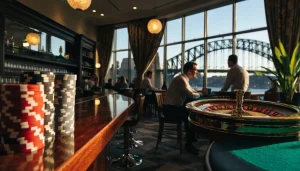
Counts are handy for orientation, but they do not replace a location check. A directory may group facilities at city level, while your practical question is whether a named venue is where you expect it to be. Look at the full venue name and its listed location before making travel plans. Dry, but useful.
For an Australia-wide picture, keep the distinction between a count of cities with gambling and a count of casino properties clear. The first describes where gambling facilities are recorded; it does not say that each city has a casino. Likewise, a city-level total does not establish the exact type or current status of every listed venue. A map can show the spread; the venue details tell you what is actually there.
Casino Reviews: Check the Venue, Not Just the Label
A review can tell you what someone thought of a visit. It cannot, by itself, establish that a venue is a licensed casino. In Australia, casino regulation sits with the states and territories, and each property operates under a licence issued by its own jurisdiction. That local detail matters more than a polished name or a confident review.
When I read a review of a pokies parlour or casino, I separate the account of the visit from claims about the venue’s status. Comments about the room, service or overall atmosphere are a reviewer’s experience. A statement that a place is “official”, “approved” or “licensed” is a different kind of claim. Look for the exact venue name and the state or territory responsible for it, then check the relevant jurisdiction’s regulator or official licensing information. A label alone proves little.
Do
- Match the venue to its jurisdiction
- Check official licensing information
- Separate personal impressions from regulatory facts
Don't
- Rely on a star rating for verification
- Trust broad licensing claims in reviews
- Use a polished name as proof of status
That distinction is easy to miss when several pages use similar wording. “Parlour” may appear in a title, a business description or a reviewer’s casual shorthand. It does not tell you whether the place is a casino, which authority regulates it, or whether the name refers to the physical venue you have in mind. Read the whole review, not only its heading, and make sure the property being discussed is identified clearly.
A useful review gives you enough context to judge what it actually describes: a visit to a named physical location, a general opinion, or a page repeating promotional language. Check whether the writer distinguishes personal impressions from facts about regulation. If those are blurred together, treat the licensing claim cautiously. Even a detailed account of a visit is not a substitute for confirmation from the relevant state or territory authority.
The same care applies to review dates and updates. A page may remain online after its details have changed, or the text may discuss a different venue with a similar name. Read the location and the wording closely. If the review does not identify the property and its jurisdiction, you have no solid basis for matching its claims to a particular licensed casino.
This does not make reviews useless. They can help you understand what a visitor noticed, while official material is the better place to verify regulatory status. Keep those roles separate: reviews describe experiences; the local licensing framework establishes which authority is responsible for a casino property.
 Best pokies in Canberra: check venue access firstA venue may be open while its gaming area has different arrangements. Learn what to verify and why directory listings alone aren’t…
 Best Pokies in Tasmania: Checking Venue DetailsLearn how to verify that a Tasmanian venue and its gaming area are operating; map listings are leads, not live confirmation, so…
So if you are weighing a pokies parlour casino review, do not let a star rating or repeated label do the checking for you. Match the venue to its jurisdiction, and treat broad claims as claims until the responsible authority confirms them. A little less guesswork.
Playing Online: What a Website Address Can’t Tell You
A site opening on your phone can feel like a useful first check. It isn’t a legal one. An accessible page, a working account area or an address that has changed does not establish that the service is authorised to provide online casino games to people in Australia.
The legal position is different from the one many overseas sites imply. Under the Interactive Gambling Act 2001, operators cannot provide real-money online casino games to customers physically located in Australia. That includes casino-style games such as slots, poker, blackjack and roulette. A foreign licence, polished website or Australian-facing sign-up page does not make that service lawful here.
The federal regulator is the Australian Communications and Media Authority, or ACMA. It enforces the Act and monitors compliance with federal interactive gambling laws. ACMA can ask Australian internet service providers to block access to websites that provide prohibited interactive gambling services or advertise them in Australia.
That is why a site’s address can be a poor guide to its status. Blocking may affect whether a domain resolves through an Australian provider, while an operator or related service may appear under another address later. A changed domain tells you that the address changed. It does not prove that the business has become authorised. Nor does a page loading successfully mean ACMA has approved it.
ACMA says it has blocked more than 1,455 illegal gambling and affiliate websites since enforcement action began in November 2019. There is also a discrepancy in reported withdrawal figures: one account says more than 210 illegal services have left the Australian market since ACMA began enforcing the rules in 2017, while another gives a figure of more than 190. The totals differ; neither changes the underlying point that enforcement has led services to withdraw and websites to be blocked.
I keep the checks separate: first, what kind of service the site offers; then, whether that service is permitted for people in Australia. A familiar name, an Australian-themed page or an alternate web address answers neither question on its own. The browser is not a regulator.
If you are looking at a page that presents online pokies or other casino games as available to Australians, don’t treat its account access as evidence of legality. You can consult ACMA’s information on interactive gambling and its enforcement work at acma.gov.au. That is a better starting point than relying on a site’s own claims or a link that happens to work today.
The wording around online play can blur distinct things together: a website may be reachable, it may invite account activity, and it may describe itself as a casino. Those are claims about access and presentation. They are not proof that an operator may legally supply prohibited casino services in Australia.
 Best Pokies in Perth: Hours and Venue ChecksFind out how to check whether a Perth venue and its gaming area are open, what “best-paying” means, and what to verify…
 Best RTP Pokies in Australia: Reading RTP ClaimsLearn why RTP is a long-run measure, not a session forecast, and how game versions and site-specific claims affect comparisons of Australian…
So if you were looking for a way to play online, the important distinction is not between one address and another. It is between a website being technically reachable and the service being lawful for Australian customers. Those are not the same thing. Short version: access proves access.
Sign-Up and No-Deposit Bonus Searches: Read the Claim Carefully
A sign-up bonus sounds straightforward: open an account and receive something in return. “No-deposit” makes the wording more tempting, because it suggests that an offer might not require an initial payment. But those phrases are claims in promotional copy, not proof that an offer exists for you, that its terms are as simple as its headline, or that the service can lawfully provide online casino games to people in Australia.
That distinction matters here. Under the Interactive Gambling Act 2001, operators cannot provide real-money online casino games, including slots, poker and table games, to people physically located in Australia. A bonus headline does not change that legal position. Nor does a page describing an offer establish that the offer is available to Australian readers. The wording may be aimed elsewhere, may be stale, or may leave out important conditions until you follow through.
I would separate three questions rather than letting one headline answer them all: What is being claimed? What conditions are attached? And what is the service’s regulatory status in Australia? The first two concern the promotion. The third is a legal question of its own. A polished page, an account form or a bonus banner cannot settle it.
What “no deposit” may leave out
The phrase can create the impression that there is nothing to assess before accepting an offer. In practice, promotional language is only the front of the claim. The full terms may define who can take part, what the bonus can be used for, how it can be withdrawn, or what restrictions apply. If those details are hard to find, inconsistent with the headline or written for a different country, treat the headline as incomplete—not as a promise.
Do not fill in the gaps from what another website says. Offers can differ between services, change, or disappear, and a copied description may not match the page it links to. Even a clear set of terms would explain only what the promotion claims to do. It would not make prohibited online casino services lawful in Australia.
“Sign-up bonus” is similarly broad. It does not tell you whether the offer is a bonus, a credit, a chance to enter a promotion, or something else defined by the operator. The label alone also says nothing reliable about whether Australian residents are eligible. Read the actual terms, but do not mistake detailed terms for Australian authorisation.
A changing web address is not a change in status
People can encounter different addresses for what appears to be the same service. A specialist review describes how blocking by Australian internet providers can affect which domains load, while replacement addresses may appear later. That is a description of how access can change—not evidence that a service has gained local approval or that an offer is now valid for Australian users.

This is where a bonus headline can muddy the issue. A page may still be visible, or a new address may circulate, while the underlying legal status remains unchanged. An accessible page is not a licence. A working account route is not a licence either. If a promotion depends on reaching an offshore casino site, the promotional wording does not resolve whether the operator may offer that service here.
The Australian Communications and Media Authority is responsible for enforcing federal interactive gambling laws. It can take action against prohibited services and request that Australian internet providers block access to sites providing or advertising them. So a domain changing, disappearing or reappearing should not be read as a regulatory endorsement. It is a technical change in access, not a legal green light.
Keep the claim in its lane
When you see a no-deposit or sign-up headline, note exactly what it says and whether the terms support that wording. Then keep that assessment separate from the question of Australian legality. One is about a promotion’s conditions; the other is about whether online casino games may be provided to people in Australia. Neither the size of a claim nor the ease of reaching its page answers both.
I would be wary of wording that leans on urgency, hides its conditions, or treats a new domain as a fresh start. None of those details proves that an offer is genuine for Australian readers, and none overrides the law. A bonus claim is still just a claim. The label does less work than it suggests.
Free Spins and Chips: Don’t Mistake an Offer for a Venue Feature
“Free spins” and “free chips” are promotional phrases, not proof that a physical Australian gaming venue includes either as a standard feature. If you see them attached to a parlour or casino name, pause before treating the wording as a description of the place. It may be advertising language, an old claim repeated elsewhere, or a reference to an online service rather than a venue you can visit.
The word “free” does very little work on its own. It does not tell you what is being offered, who is eligible, whether the offer is available in Australia, or what conditions apply. Nor does it confirm that the named business is an Australian casino. A polished page can make those ideas look as though they belong together. They still need to be checked separately.
I’d read the wording as a claim to investigate, not an invitation. Look for the entity actually making it and whether the page identifies a physical venue or an online service. Then check the relevant regulator’s information rather than relying on a logo, a copied description or a page that merely loads. Those details matter more than the promotional label.
There is an important distinction here. Australia’s land-based casino venues operate under licences issued by their state or territory, while the Interactive Gambling Act 2001 prohibits operators from providing real-money online casino games to people in Australia. That includes online slots and other casino-style games. So a phrase that appears to promise free online play should not be read as evidence of a lawful Australian online casino offer.

“Free” also does not mean “without terms”. The wording alone cannot tell you whether a claim comes with restrictions or whether it can be used at all. Don’t infer that a benefit is available simply because a page says “free”, and don’t assume that a physical casino has adopted an online promotion as part of its venue experience. A venue’s own information is the sensible place to confirm what it offers on site.
Be especially careful when the same name appears with different web addresses. Australian Communications and Media Authority enforcement records include blocking action against illegal gambling services, including alternate domains associated with Fair Go. A changed address or a page that remains accessible does not turn an online casino promotion into a licensed Australian venue feature. That is the wrong shortcut.
You may also find “chips” used loosely to suggest casino-style play, while “spins” points toward machine-game promotion. Neither word establishes that the offer relates to a real venue, that it is available to Australian residents, or that it is permitted here. Keep the wording in its lane: it describes a claim, not a verified facility.
When you’re checking a real place, separate the physical venue from anything attached to it online. Ask whether the offer is stated by the venue itself and whether it describes an on-site feature. If the claim leads instead to online casino-style play, don’t treat “free” as a workaround for Australian law. A label is not a licence.
Pokies Parlour Bonus Searches: What the Word Leaves Unanswered
A bonus attached to a “pokies parlour” sounds specific, but the phrase does not tell you what is being offered or who is offering it. It could be a loose label in a page title, a promotional claim, or wording used to attract attention. On its own, it identifies neither a particular venue nor a verified product.
That distinction matters in Australia. A physical casino and a website using casino language are not the same thing, and a bonus label does not bridge the gap. Casino properties operate under licences issued by their state or territory. Meanwhile, the Interactive Gambling Act 2001 prohibits operators from providing real-money online casino games to people in Australia. The word “bonus” does not change that legal position.
When I see the phrase, I separate three things: the place being described, the organisation behind the claim, and the supposed benefit. If a page does not clearly identify a physical venue, it may not be about a venue at all. If it names a venue, that still does not establish that the venue itself offers the advertised benefit. And if the wording points to online casino play, it is not proof that the service is lawful for Australians.
A polished banner can make those distinctions easy to miss. The practical check is to read the surrounding details rather than treating the headline as evidence. Does the page give a real venue name and location? Does it explain who is responsible for the claim? Is the language describing an actual venue feature, or simply repeating a broad promotional phrase? If those answers remain unclear, the phrase has done more work than the information beneath it.

I would not treat a generic parlour bonus as a promise, a booking detail, or confirmation that a particular casino has a matching offer. Nor does repeating the same wording across several pages make it more reliable. Familiarity is not verification.
Keep the label in its place: it is a claim to interpret, not a venue name or proof of a product. In Australia, online casino-style games offered for real money are prohibited for operators serving people here, regardless of the wording used to describe an incentive. For a physical property, look for the venue itself and its local licensing context; for an online claim, do not mistake promotional language for permission to operate.
The phrase leaves plenty unanswered. That is the point.
“VIP Parlour Casino” Doesn’t Establish Special Access
“VIP” sounds like a promise of a separate entrance, a private room or a different level of service. On its own, though, the label confirms none of those things. It does not identify a particular Australian venue, show that a special-access arrangement exists, or tell you what entry conditions apply.
I treat it as a description that needs a clear, venue-specific explanation. If a page uses the phrase “VIP parlour casino”, look for the actual property name and a direct account of what access means there. Is it referring to a members-only casino, a membership category, or simply promotional wording? Those are not interchangeable. A polished badge is not an access policy.
VIP Access Requirements
Regardless of a "VIP" label, all visitors must meet the nationwide minimum age of 18 and provide valid photo identification to enter major Australian casinos.
For a physical casino, the practical basics still matter. The minimum entry age is 18 nationwide, and major Australian casinos require valid photo identification. All major casinos operate around the clock, but that does not mean every area or service is available to every visitor at every time. Check the venue’s own current entry information rather than assuming that “VIP” overrides ordinary conditions.
I would also separate access language from claims about an online account or offer. A VIP label does not establish that an online casino is licensed to provide real-money games in Australia, nor does it prove a player has been granted any particular benefit. The wording may be used loosely; the details need to stand on their own.
That is the whole test: a named venue, a clearly described arrangement and conditions you can verify with the venue itself. Without those, “VIP” is just a label. Not a pass.

Parlour Pokies and the Casino Machine Context
When someone talks about parlour-style pokies, it helps to separate the familiar label from the setting. In Australia, gaming machines are also installed in casinos, where their presence forms part of a venue’s licensed operations. The phrase alone does not tell you whether a particular machine is in a casino, what it offers, or whether it belongs to a separate parlour.
The national count is specific: 3,308 gaming machines are endorsed on venue licences and installed in Australian casinos. That figure describes machines across the casino sector, not a catalogue for visitors and not a promise about what you will find at any one property. It is a licensing and installation count.
I would treat “parlour” as a loose description unless the place itself is identified. It can blur the difference between a gaming room, a casino floor and a name used in promotional wording. Those are not interchangeable settings. If you are checking a physical venue, look for the venue’s own description and the relevant local licensing information rather than assuming the label settles the matter.

The useful distinction is simple: pokies are a type of gaming machine; “parlour” does not establish a particular venue or a special class of machine. The national casino count gives scale, but it cannot tell you what is available at a specific address. Labels travel easily. Licensing details are less vague.
Real-Money Claims and Australian Licensing
A real-money label tells you how a service describes its games; it does not make those games lawful for people in Australia. The Interactive Gambling Act 2001 bars operators from supplying online casino-style games to customers physically here. That includes online poker and table games such as blackjack and roulette.
So when a site presents itself as a “pokies parlour casino” where you can play for money, don’t treat the wording as evidence of an Australian licence. Real-money online casinos are not a locally licensed option for Australian players. A foreign licence, polished presentation or confident claim of compliance cannot change the rule that applies here.

I’d separate two questions: what the site says it offers, and whether an operator may legally offer it to Australians. The first is advertising language; the second is governed by Australian law. ACMA, the federal regulator, enforces the Interactive Gambling Act and can investigate operators that provide or advertise prohibited online gambling services. That is about the operator’s conduct, not a stamp of approval implied by a “licensed” badge on a page.
The law’s target is the provider, not the individual player: Australians do not incur a fine or criminal prosecution simply for playing with an offshore casino. Still, that does not turn the service into a lawful Australian casino or provide the protections associated with a locally licensed venue.
When money is involved, I read the claim narrowly. It may describe a payment feature or a game format, but it does not establish that the service is authorised here. “Real money” is a warning to pause and understand the legal distinction, not an invitation to deposit. Plain enough.