From airport-area listings to CBD venues, location and venue details matter more than a broad search label.
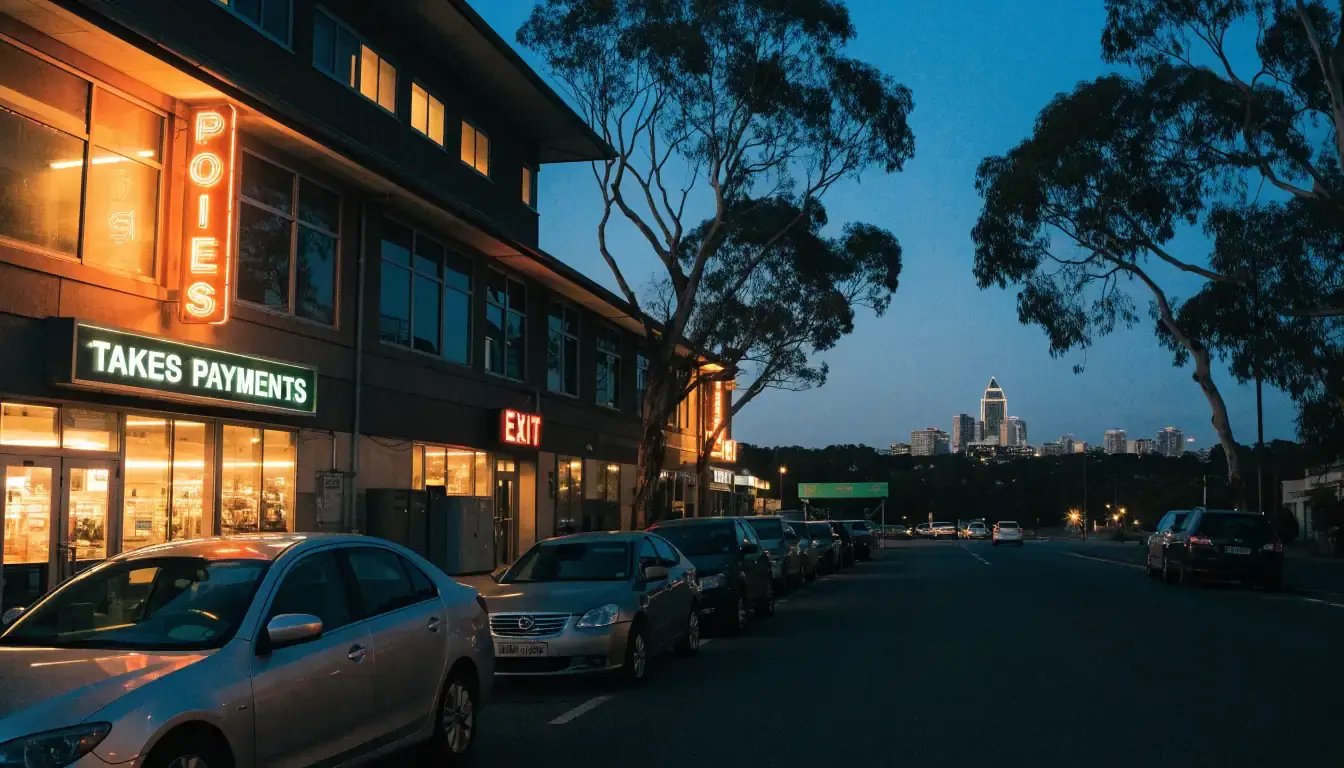
Pokies Near Melbourne Airport: Plan Around the Venue, Not the Search Phrase
“Near Melbourne Airport” can mean different things depending on where you are starting from and how far you are prepared to travel. It might mean somewhere close to the terminals, a venue on the way into the city, or simply a place in the wider Melbourne area. Those are not interchangeable plans. Before setting off, decide which one you mean.
I would start with the actual destination, not the words used to describe it. A map search for a venue near the airport may show places spread across a broad area, and a result labelled “Melbourne” does not tell you whether it sits beside the airport, on a convenient route, or well away from both. Open the map, check the address, and look at the route from your starting point. That small pause can save a needless detour.
If you are arriving by air, keep the terminal and your next stop in mind. A place that looks close on a map may still be awkward to reach if it is in the wrong direction for your onward trip. If you are already in town, search from your current location instead. The same venue can be a sensible stop from one side of Melbourne and a poor fit from another.
Separate the landmark from the neighbourhood
The airport is a useful reference point, but it does not define one neat local area. Treat it as a starting marker and narrow the destination by suburb, street, or another landmark you can identify. Then check that the address shown on the map matches the place you intend to visit. Search results can make nearby places look like a single cluster when they are not.
The same approach works around Melbourne Central. First establish whether you mean the shopping and transport precinct itself or somewhere elsewhere in the central city. Then check the route to the exact address. A broad label such as “near Melbourne Central” is not enough to tell you how close a venue is or whether getting there fits your plans.
Port Melbourne needs its own check rather than being treated as another name for the city centre. If that is the area you have in mind, confirm the suburb and street on the map before travelling. A result that mentions Melbourne may not be in Port Melbourne at all. Location labels can be broad; addresses are more useful.
I find it helps to pick one anchor point before opening a map: the airport, Melbourne Central, your accommodation, or the place you are heading afterwards. Then compare possible destinations against that point. Otherwise, you can end up chasing a result that sounds nearby but is inconvenient from where you actually are. Simple, but useful.
Check the route, not just the pin
A map pin answers only part of the question. Look at the full journey from your starting point and consider whether the route makes sense for the day you have planned. If you are travelling with someone else, agree on the destination before setting out; “somewhere near the airport” can mean a different place to each person.
For a “near me” result, make sure the map is using your current location rather than an earlier search area. If you are entering an address manually, check the suburb as well as the street name. Melbourne has plenty of places with similar-sounding location references, and a small mismatch can send you in the wrong direction.
It is also worth confirming the destination through a current map listing or the venue’s own information before making a trip. A map result is a navigation aid, not proof that a particular place offers the facilities you expect. If the listing is unclear, do not fill in the gaps from the label or a photograph. Check directly.
For searches around the airport, Melbourne Central, or Port Melbourne, the practical question is not which phrase sounds closest. It is whether the specific address fits your route and your plans. Narrow the area, verify the pin, and make sure you are travelling to the right place. That is the useful part of “nearby.”
Do
- Open the map and check the exact address
- Verify the route from your starting point
- Confirm the suburb and street name
Don't
- Rely on broad labels like "near Melbourne Airport"
- Assume a map pin shows the full journey
- Treat "nearby" results as a single cluster
When Melbourne Pokies Are Open: Check the Venue Before You Go
If you want to play before work, after dinner or while passing through town, the useful question is not whether Melbourne has pokies open now. It is whether the particular venue you have in mind is operating when you plan to arrive. Hours can differ from one place to another, and a broad listing is not a promise that the gaming area is available at that moment.
I would check the venue’s own current information first, then contact it directly if the timing matters. A map listing or an old directory entry can be a starting point, but it may not reflect a recent change, a public holiday schedule or a temporary closure. Confirm the hours for the relevant part of the venue, too: the overall premises and the area with pokies may not necessarily have identical operating times.
Before an early or late visit
For a very early start, do not assume that a venue is open just because it appears in a general “open now” result. Check the date and time shown on the venue’s own information, and call if it is unclear. The same applies late at night: a closing time can be easy to misread, and arriving close to it may leave less time than you expected.
If you are comparing a few possibilities, make a short list and verify each one separately. Check the address as well as the hours; venues with similar names or listings can be easy to confuse. If you are travelling across Melbourne, allow for the chance that a plan based on a directory entry will not match what you find on arrival. A quick confirmation is less frustrating than building the trip around an assumption.

Search wording such as “open early” or “open late” can sound like a clear answer, but it does not tell you whether a specific venue is open on the day you intend to visit. Nor does a listing that says “open now” necessarily confirm the status of the gaming area. Treat those labels as prompts to verify, not as the final check.
If you cannot reach anyone and the published information is ambiguous, make another plan rather than relying on a guess. This matters particularly when you have travelled a long way or are fitting a visit around other commitments. There is no single opening time that can safely be applied to every Melbourne venue, and I would not plan a trip on the basis of a city-wide claim.
A useful check is simple: confirm the venue, confirm the relevant hours, and confirm that the information applies to the day you are going. If anything looks inconsistent, ask the venue directly. Keep the answer in mind when planning your return, too; an open door at arrival does not tell you how long you can stay.
What opening hours do not tell you
Operating hours answer a practical question about access. They do not tell you what games are available, what return setting applies to a particular pokie, or what a future spin will do. If you came looking for a payout percentage, do not use opening information as a substitute for details about an individual game. Those are separate questions.
Likewise, a venue appearing open on a map does not establish that every service inside is operating. For a specific need, check the venue’s own details or ask before setting out. This is an ordinary bit of planning, not a guarantee: the information can change, and the venue is the best place to confirm its current position.
Responsible gambling staffing and records
Opening times also matter for a separate reason: at venues covered by the relevant requirement, responsible gambling support has to be present while the machines are operating. A report by regionriverina.com.au describes a rule taking effect from 1 July under which a venue with more than 20 gaming machines needs a dedicated responsible gambling officer (RGO) on duty during machine operation. The point is that the officer’s duty is tied to the machines being in use, not simply to the venue being open.
That report also describes a requirement for venues to keep a gambling incident register. It is intended to record relevant occurrences, including situations where a patron’s behaviour indicates they may be at risk of, or affected by, gambling harm. The register is a venue record; it is not a public timetable, and it does not tell you the hours of a particular room.
For you as a visitor, the practical takeaway is modest. If you want to ask about support or a venue’s responsible gambling arrangements, raise it with staff when you arrive or contact the venue beforehand. You do not need to infer those arrangements from a directory listing. And if you are unsure whether a requirement applies to a particular place, do not assume its machine count or staffing from how large the venue looks.
These requirements are part of the operating context, not a reason to treat an opening-time listing as complete. The current hours still need checking directly, while any question about support or venue arrangements is best put to the venue itself. Keep the two checks separate. It saves confusion.
For a planned visit, I would confirm the details on the day rather than trusting a saved result from an earlier search. That is especially sensible if the timing is tight, the listing conflicts with another one, or the venue is not answering clearly. Hours can be checked; a guess cannot.
What “Best Pokies” Can—and Can’t—Tell You
If you’re looking for pokies to play in Melbourne in 2026, this list gives you a concise reference point for reviewing the available options. Check the details that matter to you before choosing where to play.
-
Thor Casino
- License
- Curacao – Antillephone N.V. (Versus Odds B.V.)
- Min. deposit
- EUR 20
Thor Casino lists a Curacao licence held by Antillephone N.V. (Versus Odds B.V.). Its minimum deposit is EUR 20.
-
SpinsUp
- License
- Curacao Gaming Control Board OGL/2023/174/0082 (Dama N.V.)
SpinsUp lists a Curacao Gaming Control Board licence, OGL/2023/174/0082, held by Dama N.V.
-
MrPacho
- Payout speed
- crypto 30-120 minutes, fiat 24-72 hours
- Min. deposit
- A$30
MrPacho lists crypto payouts in 30–120 minutes and fiat payouts in 24–72 hours. Its minimum deposit is A$30.
-
JeetCity Casino
- License
- Curacao eGaming (Dama N.V.)
JeetCity Casino lists a Curacao eGaming licence held by Dama N.V.
-
LuckyVibe
- License
- Curacao Gaming Control Board OGL/2023/176/0095 (Hollycorn N.V.)
LuckyVibe lists a Curacao Gaming Control Board licence, OGL/2023/176/0095, held by Hollycorn N.V.
-
Rollero Casino
- License
- Curacao Gaming Control Board OGL/2023/176/0095 (Hollycorn N.V.)
Rollero Casino lists a Curacao Gaming Control Board licence, OGL/2023/176/0095, held by Hollycorn N.V.
-
House of Pokies
- License
- international iGaming licence – jurisdiction not named in the source
- Payout speed
- PayID 1-24 hours
- Min. deposit
- A$30 (PayID from A$10)
House of Pokies lists an international iGaming licence, though the source does not name the jurisdiction. Its listed PayID payout time is 1–24 hours, and the minimum deposit is A$30, or A$10 for PayID.
-
Ricky Casino
- Payout speed
- crypto under 1 hour, PayID 1-3 business days
- Min. deposit
- A$20 (A$30 to qualify for the bonus)
Ricky Casino lists crypto payouts in under an hour and PayID payouts in 1–3 business days. Its minimum deposit is A$20; A$30 is required to qualify for the bonus.
-
DragonSlots Casino
- License
- Curacao Gaming Authority (Jumpman Gaming Ltd)
DragonSlots Casino lists a Curacao Gaming Authority licence held by Jumpman Gaming Ltd.
-
JustCasino
- License
- Curacao Gaming Control Board
JustCasino lists a Curacao Gaming Control Board licence.
“Best” can mean different things when you’re looking at pokies in Melbourne. Someone might mean a game they enjoy, a particular style of play, or a higher theoretical return. Those are not interchangeable, and none is a reliable way to predict what will happen on your next spin.
The return to player figure, or RTP, describes a theoretical proportion of stakes returned over a very large number of plays. It is not a forecast for one person’s session. A specialist review reports that some providers let casinos choose between multiple RTP settings for the same pokie. That means a game’s return setting may differ from one casino to another; recognising the title alone won’t tell you which setting is in use.
If you want to compare return figures, look for information that applies to the specific game and the setting at the venue you’re considering. Treat a figure without that context cautiously. A number presented as the game’s return might not tell you which version or setting it describes.
- RTP
-
A theoretical proportion of stakes returned to players over a very large number of plays, which is not a forecast for an individual session.
Even a clearly stated RTP cannot promise a result. Each spin is a separate random event determined by a Random Number Generator. A run of wins or losses does not make the next outcome due to change. The machine has no memory of what happened to the previous player, or to you a moment earlier.
That independence is the bit people often skip when looking for the best-paying pokies in Melbourne. A theoretical return describes long-run behaviour, not a personal payout. Short sessions can land far from that figure in either direction. And a higher theoretical return, where verified, still does not make a game a dependable way to win.
I’d separate the decision into two parts: first, whether the venue suits your plans; second, whether a particular game’s published information is clear enough for you to understand. A venue choice doesn’t establish a game’s RTP, and a game’s return setting doesn’t tell you whether its style will suit you. “Best” needs a yardstick.
Nor does a popular reputation settle the question. Familiarity, bright presentation or a story about someone else’s win says nothing about the return setting attached to the game you’re playing. If the setting is not made clear, don’t fill the gap with an assumption. And don’t treat a search result or a headline as proof of a likely payout.
For anyone comparing Melbourne casino pokies, the practical point is modest: check the specific information available at the venue, understand what the return figure represents, and decide your spending limit before you start. A limit can help keep a session within bounds; it cannot make a random result predictable. If playing stops being enjoyable or starts affecting your finances, stepping away is the sensible move.
The legal age for gambling in Australia, including playing pokies, is 18. Beyond that threshold, the same basic distinction matters whether you are considering a venue in the city or elsewhere: a stated return is a long-run measure, not a promise to you. “Best paying” is a comparison to investigate, not a winning pick. Short version: no guarantees.
Melbourne Pokies Venues: What to Look for on the Ground
Choosing a venue and choosing a pokie are separate decisions. A game’s return setting tells you nothing about whether you’ll feel comfortable in a particular room, how easy it is to take a break, or what support is available if play stops feeling manageable. When I’m weighing up a place to visit, I’d start with the setting and the practical arrangements, not a claim that one venue is the “best”.
Look at the basics that affect your visit: how the gaming area is laid out, whether you can step away easily, and whether staff are visible and approachable. Those details won’t tell you what any game will pay. They can help you decide whether the venue suits you before you settle in.
- Check the layout of the gaming area
- Identify how to take a break easily
- Locate visible and approachable staff
- Set deposit, loss, and session time limits
It is also worth checking what tools the venue makes available. Deposit limits, loss limits and session time limits can help you set boundaries before you start; self-exclusion is an option for people who need to prevent themselves from gambling there. These are controls, not a way to make gambling risk-free. Set limits that fit your own circumstances, and stop if you find yourself trying to recover losses or playing longer than intended. A pause is useful. Chasing losses isn’t.
There is a staff change to keep in mind, too. A report by regionriverina.com.au says that from 1 July, venues operating more than 20 gaming machines are required to have a dedicated responsible gambling officer (RGO) on duty while those machines are running. The same report describes a one-month grace period for venues to bring in RGOs and take down signage. That gives you a practical thing to notice: whether the venue makes help easy to find, rather than leaving you to work out who to approach.
The role is not simply another person on the floor. The report says venues are also to keep a gambling incident register, recording events that include signs a patron may be at risk of, or experiencing, gambling harm. That is about how a venue responds when someone appears to need support; it is not a promise that every difficult moment will be spotted. If you want help, ask staff directly instead of assuming they have noticed.
The placement of signs matters as well. Notices pointing people towards gaming lounges should not be in sight of ATMs or EFTPOS terminals, and signs directing people to ATMs should not be visible from gaming machines. If you see directions placed where they may encourage a quick trip between cash access and play, that is worth raising with venue staff. It is a small detail with a real bearing on the room.
For a local comparison, keep your own checklist simple: comfort, access to breaks, clearly explained limits, and visible support. A polished entrance or a busy room does not tell you whether the venue is a good fit for you. Nor does a familiar name settle the question.

I would not treat a venue ranking as a substitute for those checks. “Best” depends on what you need from the visit, and no venue can make an unpredictable game predictable. Decide what would make you leave, and stick to it. Less guesswork.
Crown Melbourne: What This Search Can Actually Answer
If you have Crown Melbourne in mind, you are asking about one named venue, not pokies across the city. That distinction matters: a broad Melbourne result may point you towards other parts of town, while a Crown-focused search is about whether this particular destination suits your plans.
The name alone cannot tell you what machines are available, how a gaming area is arranged, or what is currently offered. Those details can change, and I would not treat an old mention or a passing reference as confirmation. Check Crown Melbourne’s own current venue information before travelling, and contact the venue directly if a particular feature is important to you. It is a small step that saves a bigger disappointment.
There is also a difference between choosing a venue and choosing a game. A page about Crown Melbourne may help you establish whether you are looking at the right place; it cannot, by itself, show that a particular pokie is “best” or will pay more. Each spin is an independent random event, so a venue name or a room description is not a reliable guide to what happens next.
If your interest is specifically in a “best pokies room” at Crown, be clear about what “best” means to you before comparing descriptions. You might be looking for a particular atmosphere, a location within the venue, or access to a feature you have seen mentioned elsewhere. Those are different questions, and none should be assumed from a short listing. Confirm the detail that matters rather than relying on a label.
I’d also separate Crown-specific information from general Melbourne advice. A city-wide guide can help you think about geography; it does not verify Crown’s current machines or facilities. Likewise, a mention of Crown in a forum or old review is not the same as up-to-date venue information. Keep the source and the date in view.
For a practical check, write down what you need to know, then confirm those points through Crown’s current channels before setting out. If you only want to know whether Crown is the venue you meant, its official information can answer that basic question. If you are trying to compare individual games or predict a result, the venue name cannot do that for you. A name is a starting point, not a promise.
Online Pokies and Cashless Play: Know the Legal Limits
A cashless payment option does not make online pokies legal in Australia. Under the Interactive Gambling Act 2001, operators cannot provide real-money online pokies to people in Australia without a domestic licence, and no Australian online casino holds one. The rule is aimed at companies, not individual players. That distinction matters: it does not turn an offshore site into a lawful Australian service or give you local protection if something goes wrong.

Offshore sites may accept Australian customers, but access is actively blocked and enforced against. If an offshore casino refuses to pay, Australian players have no legal recourse here to recover the winnings. I’d treat that as a serious practical risk, not fine print to skim past.
A payment method is not a safety check
PayID is a transfer service built into Australia’s New Payments Platform. It lets you send money using an email address, mobile number or ABN, and the platform uses end-to-end encryption. To use PayID for a gambling deposit, it must first be linked to a bank account.
None of that tells you whether a gambling site is licensed, fair, or transparent about a game’s return settings. A familiar payment method is not a regulatory stamp. The same goes for cashless play more broadly: changing how money moves does not change the legal status of the service.
For people looking up Melbourne online pokies, the useful distinction is between a land-based venue and a website offering real-money games. A search for “best paying” games cannot resolve the legal or payment risks of an offshore site, and the payment option cannot settle questions about game fairness. Keep those issues separate.
If a site asks for documents before paying out, check what it requires before depositing. Be prepared to verify your identity and address before a first withdrawal; do not send sensitive documents until you understand who is requesting them and how they will be handled.
Keep the safeguards in perspective
BetStop applies to Australian-licensed operators; it does not bind offshore sites. So registering there does not block an offshore gambling account or prevent that operator from contacting you. That limit is easy to miss.
If your interest is in playing at a physical Melbourne venue, use the venue’s own information to clarify what cashless options it offers. Don’t assume a payment label means a particular machine, limit or setup is available. For online real-money pokies, the legal position is much plainer: there is no Australian-licensed online casino.
Cashless does not mean risk-free. And PayID does not mean approved.
Pokies Across Melbourne’s East and West
When you’re looking beyond central Melbourne, start with the suburb or corridor you actually plan to visit. “East” and “west” cover broad areas, so a general label won’t tell you whether a venue is practical from your starting point. I’d narrow it to the suburb, then check the address and route before setting off. A result labelled for Melbourne’s east may still be a long way from the part of the east you have in mind.
The same goes for the south-east. Decide whether you mean a particular suburb or a wider direction, and use that place name to keep the search focused. St Kilda is a distinct destination, not a stand-in for every southern suburb. If that’s where you’re headed, look for information tied specifically to St Kilda rather than assuming a city-wide result applies there.
Melbourne’s western suburbs need the same treatment. A broad western-area label can bundle together places that are not close to one another. Check the location on a map and make sure it suits the trip you intend to make. A familiar area name is not an address.
One phrase worth untangling is “Newcastle Melbourne”. Newcastle is a separate city, not a Melbourne suburb. If you mean a Melbourne location, add the suburb you have in mind; if you mean Newcastle, treat it as a different destination. A mashed-together place name can point you in the wrong direction. Literally.
You may also see searches that pair a place with “best pokies” or ask about the maximum bet. Those words don’t confirm what any venue offers, and a maximum bet is not a sensible way to choose where to go. Check venue-specific information directly, and set a spending limit before you play. Pokies are gambling, not a reliable way to make money.
For any suburb, keep the process simple: identify the exact area, confirm the address, and check that the information you’re relying on is about that location. Don’t infer that a venue or particular machines are present just because a broad-area page mentions them. That small bit of checking saves a wasted trip.
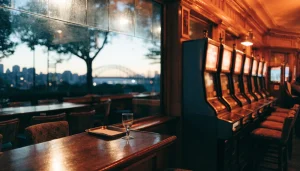
Finding Pokies in Melbourne’s CBD and Clubs
A CBD search and a club search point to different kinds of places, so I’d keep them separate when deciding where to go. “CBD” is a geographic filter; “club” describes the type of venue you have in mind. Neither term, on its own, confirms that a particular place has pokies. Check the venue’s own information before setting out, rather than treating a map label or directory entry as confirmation.
If you’re comparing central Melbourne with a club farther out, first decide which area suits your trip. Then check the specific venue and its current details. That keeps a CBD search from turning into a broad suburban hunt, and stops a club listing from being mistaken for a recommendation. I wouldn’t call any place the “best” on location alone; the label tells you little about what playing there would be like.
Crown Melbourne is a separate, named-venue search. If that’s the place you mean, look for its own information rather than folding it into results for CBD clubs generally. For other central venues, use the exact suburb or nearby landmark to narrow the area, then confirm the venue directly. Small distinction, useful one.
If you’re looking for self-exclusion, ask the venue how its in-person process works before you go. Deposit, loss and session-time limits, along with self-exclusion, are recognised responsible-gambling tools, but don’t assume the same arrangement applies everywhere. BetStop is different: it applies to Australian-licensed operators and does not bind offshore sites. It is not a substitute for asking a physical venue about its own process.
One practical detail matters inside venues: signage directing patrons to gaming lounges should be removed if it is within sight of ATMs or EFTPOS terminals. Signs pointing to ATMs should also be removed when they can be seen from gaming machines. If you notice a sign in either position, that’s a venue concern—not a reason to keep playing.

Keep the choice simple: CBD for a central location, club for a club setting, and Crown when you specifically mean Crown. Confirm the place, then decide whether it suits you.
North and South Melbourne: Keep the Search Local
North Melbourne and South Melbourne are distinct place names, not handy labels for every venue on that side of the city. If you want pokies near either one, start with the suburb you actually plan to be in, then check the venue’s address on a map. A result that mentions “north” or “south” in its description may still be a poor fit for your route.
I’d use the suburb name as a starting point, not proof that a particular venue is there. Check the mapped address, how you’ll get there, and whether the destination makes sense from your starting point. Search results can stretch a location label; maps make the geography easier to judge.

There’s another small trap: a venue may describe itself as serving a wider area, while its address sits outside the suburb you had in mind. If staying close matters, look at the address rather than relying on a broad location phrase. If you’re flexible, compare the route to the actual destination instead of assuming that “nearby” means an easy trip.
I keep North Melbourne and South Melbourne searches separate until I know which one fits the day’s plans. That avoids mixing up two different local areas and following a result simply because it contains the right words.
Before setting out, confirm the venue details directly. A map pin can help you choose where to look, but it does not establish what is available inside. Keep the search tied to the neighbourhood you mean, and you’ll have a clearer shortlist without pretending that every nearby result is the same place. No guesswork needed.
Are online pokies legal for Australian players?
Yes, Australians can legally play on offshore sites that accept them, but no Australian-licensed online casino exists. The law targets operators offering real-money pokies without a domestic licence, and you have no legal recourse in Australia if an offshore casino refuses to pay your winnings.
What is the cost-benefit calculation of casino promotions?
Check the wagering requirement and what it applies to before accepting a promotion. For example, a $500 bonus with a 40x requirement means $20,000 in bets before withdrawing winnings; if the requirement applies to a $500 deposit plus a $500 bonus at 35x, it means $35,000 in bets. Free-spin winnings may also be capped.
What is the minimum PayID deposit?
Most operators set minimum deposits at AU$10 to AU$20, though some accept AU$5. PayID is treated like other qualifying deposit methods.
Are online pokies rigged?
Each spin is an independent random event determined by a Random Number Generator. However, some providers let casinos choose between different RTP settings for the same game, so its return percentage may vary by casino.