A guide to the legal limits, common formats and key differences between online table games and games in physical casinos.
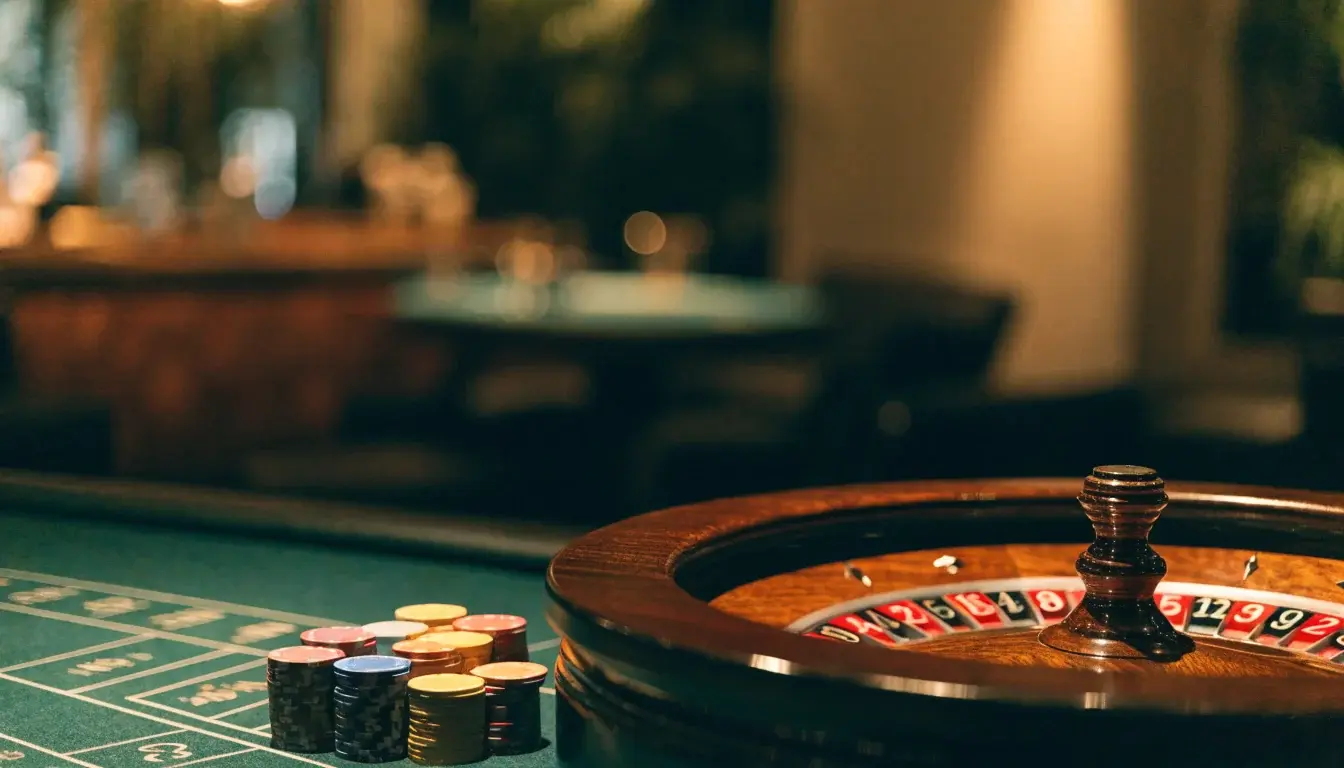
Online Table Games in Australia: The Legal Ground Rules
For real-money casino table games, the starting point in Australia is the Interactive Gambling Act 2001 (IGA). The law restricts the service being offered: operators cannot provide real-money online casino games to people in Australia. That includes table games, whether a player accesses them through a website or another online platform.
Section 5 is central to this rule. It prohibits operators based in Australia from offering real-money interactive casino games to residents. More broadly, the IGA makes it illegal for operators to provide these services to people physically located in Australia. The practical point is that the rules concern the operator’s conduct and the service offered, not just the name attached to a game.
This can be easy to muddle with the rules for gambling in a physical venue. An online casino service is not made lawful simply because it offers familiar casino games, or because its website is easy to reach. The relevant question is whether a real-money interactive gambling service is being provided to someone in Australia. The law treats online casino-style games as prohibited services in this context.
When you’re considering real-money casino table games in Australia in 2026, clear operator details can help you decide what to check before playing. Use these verdicts as a concise reference to the information available for each operator.
-
Thor Casino
- License
- Curacao – Antillephone N.V. (Versus Odds B.V.)
- Min. deposit
- EUR 20
Thor Casino is listed with a Curaçao licence from Antillephone N.V. (Versus Odds B.V.) and a minimum deposit of EUR 20. Check whether those terms suit you before depositing.
-
SpinsUp
- License
- Curacao Gaming Control Board OGL/2023/174/0082 (Dama N.V.)
SpinsUp is listed with a Curaçao Gaming Control Board licence, OGL/2023/174/0082, held by Dama N.V. That licence is the key available detail to review.
-
MrPacho
- Payout speed
- crypto 30-120 minutes, fiat 24-72 hours
- Min. deposit
- A$30
MrPacho lists a minimum deposit of A$30, with stated payout times of 30–120 minutes for crypto and 24–72 hours for fiat. Consider which payment method and timing work for you.
-
JeetCity Casino
- License
- Curacao eGaming (Dama N.V.)
JeetCity Casino is listed with a Curaçao eGaming licence held by Dama N.V. This licensing detail is the available point to review.
-
LuckyVibe
- License
- Curacao Gaming Control Board OGL/2023/176/0095 (Hollycorn N.V.)
LuckyVibe is listed with a Curaçao Gaming Control Board licence, OGL/2023/176/0095, held by Hollycorn N.V. Check the licence details as part of your assessment.
-
Rollero Casino
- License
- Curacao Gaming Control Board OGL/2023/176/0095 (Hollycorn N.V.)
Rollero Casino is listed with a Curaçao Gaming Control Board licence, OGL/2023/176/0095, held by Hollycorn N.V. The available information identifies its licence and holder.
-
House of Pokies
- License
- international iGaming licence – jurisdiction not named in the source
- Payout speed
- PayID 1-24 hours
- Min. deposit
- A$30 (PayID from A$10)
House of Pokies lists an international iGaming licence, though the jurisdiction is not named in the source. Its stated PayID payout speed is 1–24 hours; the minimum deposit is A$30, or A$10 with PayID.
-
Ricky Casino
- Payout speed
- crypto under 1 hour, PayID 1-3 business days
- Min. deposit
- A$20 (A$30 to qualify for the bonus)
Ricky Casino lists crypto payouts in under 1 hour and PayID payouts in 1–3 business days. Its minimum deposit is A$20, while A$30 is required to qualify for the bonus.
-
DragonSlots Casino
- License
- Curacao Gaming Authority (Jumpman Gaming Ltd)
DragonSlots Casino is listed with a Curaçao Gaming Authority licence held by Jumpman Gaming Ltd. This is the main available detail to consider.
-
JustCasino
- License
- Curacao Gaming Control Board
JustCasino is listed with a Curaçao Gaming Control Board licence. The available information is limited to that licensing detail.
Who enforces the rules?
The Australian Communications and Media Authority (ACMA) enforces the IGA’s requirements. Its work includes blocking unlicensed domestic platforms. That enforcement role matters: the prohibition is not merely a statement about what operators should do, but a rule that Australian authorities act to uphold.
A website appearing online does not, by itself, establish that its service is authorised for use in Australia. Nor does an operator’s location overseas remove the Australian legal setting from the picture. The law’s focus is on providing real-money interactive casino services to people in Australia, and the legal framework is actively enforced.
That distinction is worth keeping in view when you see claims that online casino table games are available to Australian players. A claim made on a website is not the same thing as a statement of Australian law. Likewise, the presence of a game title, a real-time interface or a payment method does not settle whether the underlying service can lawfully be offered here.
What this means for players
The IGA’s prohibition is directed at operators providing the service. It is not a general ban on knowing what casino table games are, reading about them or understanding how the law treats online gambling. But the boundary is clear for real-money play: operators cannot lawfully provide online casino games to people in Australia.
That also means it is misleading to treat offshore availability as a simple workaround. The relevant legal question is not just whether a platform is based outside Australia, but whether it is providing a prohibited service to people here. The law’s application and enforcement should not be reduced to a site’s own description of its status.
 Australian Casino Games and Apps GuideBrowse focused guides to Australian pokies, slot types, casino apps, withdrawal options, offshore casinos and live table games.
 Online pokies in Australia: understanding payoutsLearn how game returns differ from withdrawal speed, why return figures are theoretical over extended play, and what to check before depositing.
If you are trying to understand a particular service, separate three things: what the platform says, where the operator is based, and what Australian law permits. An overseas address or a statement that a service accepts Australian customers does not override the IGA. And a blocked service is not a sign that the rules have changed; it is consistent with enforcement.
Promotions and “free” play
The legal ground rules also matter when a page promotes table games, bonuses or other inducements. A promotion does not change the character of a real-money casino service. If the underlying offer is to provide prohibited online casino gambling to people in Australia, presenting it as a special deal does not make it permissible.
The same care applies to phrases such as “free games”. A free-play description should not be confused with permission to offer real-money gambling.
So, when you come across material about online table games, read it with the Australian rule in mind rather than treating availability as approval. The law prohibits operators from providing real-money online casino games to people in Australia, and ACMA enforces compliance. That is the ground rule.
What Counts as a Casino Table Game?
A casino table game is built around play at a table: cards are dealt, a wheel is used, or another table-based setup determines the action. Online, you may see a digital table on screen rather than a physical one. The table is the setting for the game, not proof that a real dealer is involved.
That distinction matters. A game can look like a table game without using a live table. In an online version, software uses a Random Number Generator (RNG) to determine outcomes such as which cards you receive or where a roulette ball lands. The result is generated by software, even if the screen shows a familiar table layout.
A live-dealer game works differently. A real dealer uses real casino equipment, and video of the game is streamed to players. You are watching a live table rather than an animation of one. So when you see “live” attached to a table game, it describes how the game is presented and run; the table-game label alone does not tell you that.
The practical test is simple: ask what produces the outcome. If the result comes from an RNG, it is an online software game. If a dealer and physical equipment are shown in a live stream, it is a live-dealer format. Both can belong to the broad category of casino table games, but they are not the same format.
This is also where the phrase “table games software” can be confusing. It may refer to the software that presents an online game and generates its outcomes, rather than to casino management tools behind the scenes. Those are different things: one is part of the player-facing game; the other concerns operating or managing casino tables. The phrase by itself does not tell you which is meant, so look at the surrounding description.
 Real-money pokies on Android in AustraliaLearn how Australian rules apply to offshore casino operators, what ACMA blocking can mean for access, and how free-play pokies differ from…
 Dragon Link Online Pokies in Australia: What to KnowLearn what a Bitcoin pokie label confirms—and why “Dragon Link” alone does not establish a game's identity or online availability in Australia.
A table on screen is not necessarily a table in a studio. That small distinction clears up a lot.
When people ask what table games are in a casino, they are usually asking about the category, not one particular set of rules. The category covers games organised around table play, while other casino formats use a different structure. The precise rules depend on the individual game, so the label does not tell you how to play, what choices are available, or how an outcome is settled.
If you are comparing descriptions, keep three ideas separate: the game’s table-based format, whether its outcome is generated by software, and whether a real dealer is streamed. A digital table can be software-run; a live stream can show real equipment. The appearance may be similar, but the source of the action is not. That is the useful vocabulary to have before reading about individual games.
How to Read Bonus Terms Before You Play
Before you consider any bonus condition, check whether the service can lawfully offer the game to people in Australia. The terms themselves are a separate issue: they explain what must happen before bonus-linked funds or winnings can be withdrawn. I treat them as a set of conditions, not as extra cash with no strings attached.
Start with the wagering calculation
A wagering requirement tells you how much qualifying betting must be recorded before a cashout is permitted. The multiplier may apply to the bonus alone or to the deposit and bonus together, so find the stated calculation base first.
Wagering Calculation
-
1
Identify the bonus
An A$100 bonus is awarded.
-
2
Apply the multiplier
A 30x wagering requirement is applied to the bonus.
-
3
Calculate total bets
100 × 30 = A$3,000 in total qualifying bets required before a cashout is permitted.
A specialist review gives this illustration: an A$100 bonus with a 30x requirement calls for A$3,000 in total qualifying bets. That figure is the amount wagered, not the amount you must lose; it does not predict what your balance will be when the requirement is met. The distinction matters. A large turnover target can remain hard to clear even if the multiplier looks modest.
The same type of review describes 35–40x requirements as reasonable and those above 50x as difficult. Those are the review’s judgements, not a rule or a guarantee about how manageable a particular offer will feel. Check the precise wording and calculate the target yourself.
Check whether table games count
The contribution rate determines how much a wager on a particular game adds to the wagering target. A specialist review describes blackjack and roulette as potentially contributing 10–20%, with some games excluded entirely. At a 10% contribution, for instance, only a tenth of the qualifying stake is credited toward the requirement. The effect is that the target can take far more betting to clear than the headline multiplier suggests.
Do not assume that every table game counts equally, or that a game you enjoy will count at all. Read the contribution table and look for the specific game or category. If the terms exclude it, bets there will not advance the requirement. If you cannot tell how a game is classified, the wording is not clear enough to rely on.
 Real-Money Pokies Apps in Australia: Access GuideLearn how browser access works on Android and iPhone, why casino apps are rarely listed in Australian app stores, and what to…
 Online Pokies Australia: Real-Money No-Deposit OffersLearn why a “real-money” no-deposit balance may still be promotional, how terms affect withdrawals, and what offshore status means for Australian players.
Note the deadline and maximum bet
A wagering target is only one part of the condition. A specialist review describes welcome-bonus time limits of 21–30 days as a typical range; the actual deadline is the one in the applicable terms. Check when the clock starts, what event ends it, and whether unfinished wagering means the bonus or related winnings are removed.
Also look for a maximum bet while bonus funds are active. A specialist review reports limits around A$5–A$10 per hand or spin in many terms. The amount and scope vary, so check whether the cap applies to every wager and what happens if it is exceeded. Some terms say breaching it can void the bonus and winnings linked to it. A small print limit can decide a cashout.
Read the terms as a whole
For a clear picture, put the wagering base, contribution rate, deadline, eligible games and maximum bet side by side. Then work out whether the permitted games can contribute enough within the stated period. A low multiplier is not automatically easy if the games you intend to play count lightly; a generous-sounding deadline is no help if it has already started.
I would not judge a condition by its headline alone. The details decide what qualifies and whether a withdrawal can be made. That is the part worth reading twice.
Bitcoin Table Games: What This Guide Can and Can’t Compare
Bitcoin may appear as a payment option in discussions of online casinos, but that alone tells you very little about the table games themselves. It does not establish that a game has different rules, a different outcome process or better odds when Bitcoin is involved. Nor does the payment method show whether a particular game is suitable for you.
So a comparison between Bitcoin table games and table games associated with other payment methods needs a clear limit: the currency or payment method is not, by itself, evidence of a difference in play. A table game’s rules describe how the game works; payment arrangements concern how funds are handled. Treating those as interchangeable is an easy way to draw conclusions the information does not support.
The same restraint applies when someone asks for the best Bitcoin casino table games. “Best” could mean different things: preferred format, familiar rules, a particular pace of play, or odds. Without evidence establishing those criteria for specific games, there is no sound basis for ranking Bitcoin-related options or naming a winner. A list of top table games would look decisive, but the label would be doing the work that evidence should do.
Separate the payment question from the game question
If you encounter a claim about BTC casino table games, first ask what it actually compares. Is it describing a payment method, or does it provide information about the game? A reference to Bitcoin does not, on its own, tell you whether a table game is software-generated or streamed with a dealer, what rules apply, or how outcomes are determined. Those are separate details.
The same goes for phrases such as “tabletop casino games” or “felt table games”. They may point to the familiar image of a casino table, but the wording does not establish that one version is better than another, or that a Bitcoin connection changes the experience. If a description does not explain the distinction it claims to make, there is not much to compare.
 Real Cash Online Pokies in Australia: How They WorkLearn how free play differs from real-money pokies, and what to consider about offshore sites, Bitcoin deposits and withdrawals, and payout checks.
 Australian Mobile Casinos: Sites, Apps and PaymentsLearn how browser access, PWAs, account use, payment options and bonus terms shape mobile casino play; native apps are rarely listed in…
I would also keep “available to play” separate from “appropriate to use”. A page being visible, or a payment method being mentioned, does not settle the legal position for someone in Australia. Real-money online casino services are restricted under Australian law; a Bitcoin reference does not create an exception. That is worth keeping in view without mistaking access claims for proof of permission.
What a responsible comparison would need
For a useful comparison, the details would need to be about the games themselves: their rules, the way outcomes are produced, and any reliable information that supports a claim about odds or returns. A payment label cannot fill those gaps. If a description only says that Bitcoin is accepted, it supports a statement about payment—not a conclusion about game quality.
That distinction matters whether you are looking for a particular table format, browsing a casino’s open games, or trying to decide which table games deserve attention. Names like “top” and “best” are not evidence. Neither is a claim that a game is made for Bitcoin unless it explains what that means beyond the payment method.
For now, the safe comparison is a narrow one: Bitcoin is a payment-related term, while table-game rules and outcomes are separate subjects. It does not identify the best game, establish that one has better odds, or show that its rules differ from a comparable game elsewhere. Keep those questions apart. The distinction is simple; the marketing often isn’t.
Table-Game Odds and the Limits of ‘Best’
“Best odds” sounds like a neat way to choose a casino table game. In practice, it can mean several different things: a lower house advantage, a higher chance of a particular result, or a smaller swing in outcomes. Those are not interchangeable. A game can feel less volatile without offering a better expected return, and a chance of winning a hand says little on its own about how much that hand pays.
I would not treat a general ranking of table games as a reliable shortcut. To compare odds properly, you need the exact game version, its rules and the bet being considered. A broad label such as blackjack or roulette does not describe every setting that affects the calculation. A house-edge chart without that context can look precise while answering the wrong question.
The same caution applies to claims about the worst odds. There is no useful universal label if the comparison does not spell out what is being measured. Are you looking at the expected loss on a particular bet, the chance of winning, or how often results vary? Without a clear basis, “best” and “worst” are more sales language than analysis.
There is a related distinction worth keeping in mind: odds are not a promise about what happens in your session. Even when a mathematical expectation is known for a specific game and bet, it describes repeated play over time, not a forecast for the next hand or spin. A short run can land far from the expectation. That does not mean a table has changed its odds; it means individual results vary.
 Mines Casino Game in Australia: What to CheckLearn how Mines differs from Australian pokies, how demo play differs from cash play, and what wagering and cashout terms to check;…
 New Australian Online Pokies: Rules and ClaimsLearn how Australian rules apply to online pokies, what PayID and release claims can verify, and why “Australian” does not prove a…
Nor does a recent streak provide evidence that a game is due to turn around. Random outcomes can cluster, and a run of wins or losses does not by itself reveal what the next result will be. I would be wary of systems that claim to read a pattern from a handful of outcomes. They turn ordinary variation into a story.
If you are comparing a particular table, start with the rules and the exact wager you intend to make. Look for a clear explanation of how the result is determined and what the payout applies to. If a claimed advantage is not tied to those details, it is difficult to assess. A confident headline is not a calculation.
It also helps to separate odds from personal preference. A game may suit someone who likes a slower pace or a certain style of decision-making, but that does not establish that it has better odds. Enjoyment, complexity and mathematical return are separate questions. Keep them separate, and you are less likely to mistake a familiar game for a favourable one.
There is no honest single answer to “what casino table games have the best odds?” without a defined comparison and game-specific figures. The sensible move is to assess the precise version and bet in front of you, rather than trust a league table that leaves out its assumptions.
No magic table.
Finding a Nearby Casino with Table Games
A request for a casino close by only becomes useful once “nearby” has a location attached to it. Without your suburb or city, there is no meaningful nearest venue to name—and I won’t guess at one or claim that a particular place has table games.
- Specify the Australian city or suburb.
- Check information published by the venue itself.
- Verify if the specific table games you want are available.
- Confirm the address is within Australia.
If you are checking venues in Australia, start with the city or suburb you mean, then look for information published by the venue itself. A map result can help identify a location, but it may not tell you whether table games are available, which games are offered, or whether the information is current. Check the venue’s own details, or contact it directly before making plans. A listing is a starting point, not confirmation.
The same applies if you have a specific kind of table in mind. “Casino with table games” does not tell you which games are available at a venue, and a general page may not provide that detail. Check the exact offering rather than assuming that every venue has the same setup. Small distinction; useful one.
Some location phrases also need a second look. Miami and Ohio are in the United States, not Australia, so they do not identify a nearby Australian venue. If you are planning within Australia, use an Australian location in your search and verify the address against the venue’s own information. Don’t treat a result for another country as a local option.
There is a separate point if you mean playing online rather than visiting a physical venue. Australian law prohibits operators from providing real-money online casino games to people in Australia. A nearby venue search should not be taken as a way to find an online casino that is permitted to serve Australian residents.
I’d keep the check simple: identify the Australian area you mean, confirm the venue’s location, then verify directly whether it offers the table games you are asking about. If those details are not clearly stated, don’t fill the gap with a guess. A confident map pin is not a game list.
 Safe Online Pokies in Australia: Bitcoin BasicsLearn how Bitcoin pokies differ from other payment choices, why an exchange and wallet are separate steps, and how Bitcoin’s value can…
 Bonus Buy Slots in Australia: Features and RTPLearn what a bonus-buy label leaves unclear, how demos differ from real play, and why RTP, stakes and game versions matter when…
Live Table Games and the Formats You’ll Encounter
A live table game is defined by what is happening at the other end of the video: a real dealer operates real casino equipment, and the game is streamed to players. You are watching a dealer-led session rather than a table represented only on your screen. That is the key feature behind the “live” label.
The stream gives the game a visible, physical setting. You can see the dealer and equipment as the session unfolds. But the video itself does not tell you everything about the service around it. A live feed is a description of the game format, not proof that a casino is authorised to offer real-money play in Australia, or that the service is lawful to use here.
That distinction matters in this market. The Interactive Gambling Act 2001 prohibits operators from providing real-money online casino games to people in Australia. So a page describing live casino table games should not be read as an invitation or endorsement. The format can be explained without suggesting that Australian residents should seek out a real-money service.
You may also see “live dealer” used as a label. It points to the same central feature: the dealer and casino equipment are real, and their video is streamed to players. It does not, by itself, establish what else a particular service offers or how its rules and conditions work. Those details cannot be inferred from the word “live”.
- Live Dealer
-
A format where a real dealer uses real casino equipment and the game is streamed via video to players.
When you encounter the term, keep the question narrow: does it refer to a real dealer and real equipment shown through a live video stream? If so, it describes the presentation format. It is not a rating, a guarantee, or a recommendation. Nor does it make a game more suitable for you; the label says how the action is presented, not whether you should take part.
There is no useful “best live table games” list to draw from that definition alone. “Live” groups games by their streamed dealer setup; it does not name particular games or establish which one is preferable. A list built from the format label would blur those separate questions.
For an Australian reader, the practical point is simple: recognise what the label means, then keep it separate from questions of legality and suitability. A live camera can show a real table. It cannot settle either of those questions.
Card Tables: Baccarat and Blackjack Basics
Blackjack and baccarat are both familiar names among casino card table games, but the basic betting idea described for each is different. In blackjack, your hand is measured against the dealer’s. In baccarat, the stated choices are to back the player’s hand, the Banker’s hand or a tie. Those simple descriptions are a useful starting point; they are not a full set of table rules.
In blackjack, you compete with the dealer to finish with a hand value closer to 21. The comparison is between your hand and the dealer’s, rather than between the hands of everyone at the table. That gives the game a direct shape: you are considering your own total in relation to the dealer’s total. The aim is not simply to collect cards or to beat another player.
 Crash Casino Games in Australia: Rules and DifferencesLearn how crash rounds differ from pokies, what “best” can mean, and why bonus, crypto withdrawal and jackpot terms need separate checks.
 Lightning Link Online Pokies in Australia ExplainedLearn why the original Lightning Link is limited to venue machines in Australia, and how free play, similar online games and machine…
That is as far as the basic objective goes. Details beyond it can depend on the game’s rules, so it is sensible not to assume that every blackjack table works identically. If you are reading a table description, look for the rules that apply to that particular version rather than relying on a general label. Small print matters.
Baccarat uses a different kind of choice. The betting description centres on three outcomes: the player’s hand, the Banker’s hand or a tie. The words “player” and “Banker” name the two hands in that choice; they should not be read as a promise that you are playing against another customer. The key point is that the bet is about which of those outcomes applies.
For a newcomer, the labels can make baccarat sound more complicated than its basic betting structure. You do not need to infer extra rules from the names alone. The useful distinction is straightforward: blackjack sets your hand against the dealer’s target, while baccarat presents a choice among the player hand, Banker hand and tie.
When comparing these card tables, start with the objective and the available bet, then check the specific rules shown for the game. A familiar title tells you the broad format, not every detail of how a particular table is run. Keep the basics separate from assumptions. Simple, but worth doing.
Roulette Rules Start with the Wheel
When you sit down at a roulette table, start by looking at the wheel. Its layout distinguishes the main versions: European, French and American. The key difference to notice is the green pocket or pockets marked zero.
European Roulette
Features 36 numbered pockets and one green pocket marked 0.
French Roulette
Features 36 numbered pockets and one green pocket marked 0.
American Roulette
Features 36 numbered pockets, a green 0, and a second green pocket marked 00.
European and French roulette each have 36 numbered pockets and one green pocket marked 0. The American wheel has a green 0 and a second green pocket marked 00. That extra pocket is the clearest visible distinction between the American layout and the other two.
The names can make European and French roulette sound like entirely separate formats. For the wheel detail covered here, though, they share the same count: 36 numbered pockets and a single green zero. American roulette is the one with both zero and double zero.
That is a straightforward way to identify which version you are looking at, whether the table is shown on a screen or in a live stream. Check the wheel itself rather than relying only on a title or label; the markings tell you which layout is in front of you.
Read the layout first
In a digital game, the wheel may be represented on screen, while a live table shows the physical wheel. Either way, the same markings matter: look for a single green 0, or for both 0 and 00. This is a practical first step before you read the table’s other information.
European and French roulette should not be confused with American roulette just because all three use numbered pockets. The count and zero markings are the useful distinction described here. A green 00 is not another name for the single zero; it is an additional pocket on the American wheel.
If you are comparing casino table games, keep the question narrow at first: which roulette wheel is being used? The version name and the visible layout should agree. If they do not, pause and check the game information instead of guessing from the label.
This wheel check does not explain every roulette rule, and it does not tell you anything about a game’s odds or returns. It simply helps you recognise the main roulette versions and their pocket layouts. Start with the markings. The rest can wait.
 Aristocrat Online Pokies in Australia: What to KnowLearn how maker names differ from casino listings, and why a mention alone cannot confirm game availability or identify a particular machine.
 3-Reel Slots in Australia: How They WorkLearn how three-reel slots work, what classic-reel labels mean, and how RTP, free play, downloads and Australian rules affect game choice. Each…
Poker and Dice Games: Different Ways to Play a Table
Poker and dice games both fit under the broad table-game label, but the central activity is different. In poker, players compete to build the best possible hand. In a dice game, players roll a pair of dice and place bets on the outcome. One centres on cards and hand-building; the other on a roll.
That distinction is useful when you see casino poker table games mentioned alongside other formats. The name tells you the general kind of play, but not the details of a particular version. Poker is about comparing hands, while the dice description is about predicting what a pair of dice will produce. I’d keep those basics separate rather than assume every table game works like a card game.
You may also encounter searches for different types of casino poker table games. Without a particular game’s rules in front of you, the safe starting point is the shared idea: players are trying to form the strongest possible poker hand. The exact way a version is played can’t be inferred from that description alone. A label is not a rulebook.
The same caution applies to dice. Knowing that players roll a pair and bet on the result does not tell you which outcomes are available or how a specific game settles them. Check the rules for the named version before treating two games as interchangeable.
These are descriptions of game mechanics, not an invitation to play. Real-money online casino games, including poker and table games, are prohibited for operators serving people in Australia under the Interactive Gambling Act 2001. The distinction still helps you understand what a page means when it uses the terms “poker” or “dice”: one is built around making a hand, the other around a roll. Simple, but not the same.
Can you play table games online for real money?
No, operators cannot lawfully provide real-money online casino table games to people in Australia under the Interactive Gambling Act 2001.
What is the legal status of online table games for Australian players in 2026?
Real-money online casino table games are prohibited services when offered to people in Australia. ACMA enforces the rules, and an offshore operator’s claims do not change the Australian legal position.
Are online casinos legal in Australia?
Real-money online casino services cannot lawfully be provided to people in Australia under the Interactive Gambling Act 2001. ACMA enforces the law.